
PDRN, Exosomes, and the Rise of Skin Barrier Repair Technology
For more than a decade, South Korea has been a global leader in skincare innovation. As we move into 2026, however, the direction of K-Beauty is undergoing a clear and meaningful shift.
The focus is no longer on fast, aggressive results.
Instead, the industry is moving toward long-term skin health, scientific formulation, and ingredient credibility.
At the center of this evolution are three key ingredient trends dominating discussions among Korean formulators, brands, and raw material suppliers:
- PDRN (Polydeoxyribonucleotide)
- Exosomes and biotech-derived actives
- Advanced skin barrier repair systems
This article explores why these ingredients are gaining traction in Korea and how they are shaping skincare formulation strategies in 2026.
Why Skin Barrier Repair Has Become a Long-Term Core Strategy in Korea
In recent years, Korean consumers have become far more educated about how skin actually functions. Several factors have driven this change:
- A growing population with sensitive or compromised skin
- Increased use of dermatological and aesthetic treatments
- Rising concerns about over-exfoliation and ingredient overload
As a result, skin barrier health is no longer a marketing concept — it is now a baseline requirement for product performance and safety.
A shared industry understanding is emerging:
Without a healthy skin barrier, even the most advanced active ingredients cannot deliver sustainable results.
In 2026, Korean skincare formulations commonly reflect three principles:
- Low-irritation, high-compatibility ingredients
- Repair-first formulation logic
- Long-term safety and daily usability
PDRN: From Medical Aesthetics to Everyday Skincare
What Is PDRN?
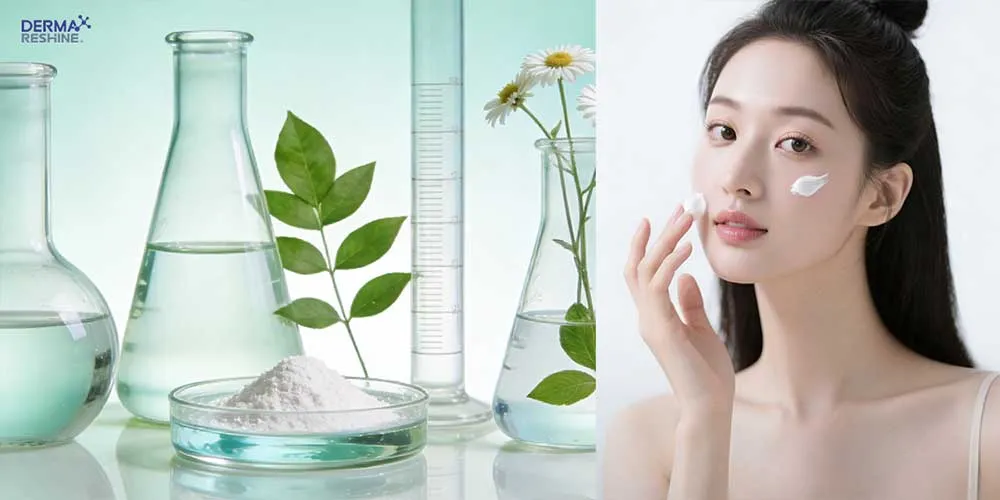
PDRN (Polydeoxyribonucleotide) is a low-molecular-weight DNA fragment typically derived from salmon or trout sources. Originally developed for medical use, it has been widely studied for its role in tissue repair and inflammation modulation.
In Korea, PDRN has moved well beyond clinical and post-procedure products and is now commonly found in:
- Repair serums and ampoules
- Functional essences
- Barrier-focused creams
- Sensitive skin formulations
Why PDRN Continues to Grow in Korea
From a formulation standpoint, PDRN offers several advantages that align perfectly with current K-Beauty values:
- Supports the skin’s natural repair mechanisms rather than forcing rapid turnover
- High biocompatibility with a low irritation profile
- Strong synergy with barrier-repair ingredients
For Korean brands, PDRN represents a bridge between medical credibility and daily skincare practicality.
How PDRN Is Evolving in 2026
The conversation is shifting from “whether to use PDRN” to how well it is formulated:
- Greater emphasis on purity and molecular consistency
- Increased use alongside ceramides, panthenol, and β-glucan
- Expansion from post-treatment care to daily skin-stabilizing products
Exosomes: The Next Phase of Biotech Skincare
If PDRN represents proven regenerative science, exosomes represent the frontier of Korean biotech skincare.
What Are Exosomes?
Exosomes are nano-sized vesicles secreted by cells. They act as biological messengers, transporting proteins, lipids, and signaling molecules that influence cellular behavior.
In skincare research, exosomes are being explored for their potential to:
- Support skin recovery signaling
- Reduce inflammation
- Promote barrier homeostasis
The Reality of Exosomes in the Korean Market
From an industry perspective, it is important to separate science from hype:
- Exosomes are currently concentrated in high-end or professional skincare lines
- Regulatory clarity and standardization are still evolving
- Plant-derived and fermentation-based alternatives are gaining strong interest
In 2026, the key questions are no longer “Are exosomes innovative?” but rather:
- Is the source transparent and traceable?
- Is stability well controlled?
- Can the ingredient be responsibly scaled for long-term use?
Skin Barrier Repair Technology: The True Foundation of Modern Skincare
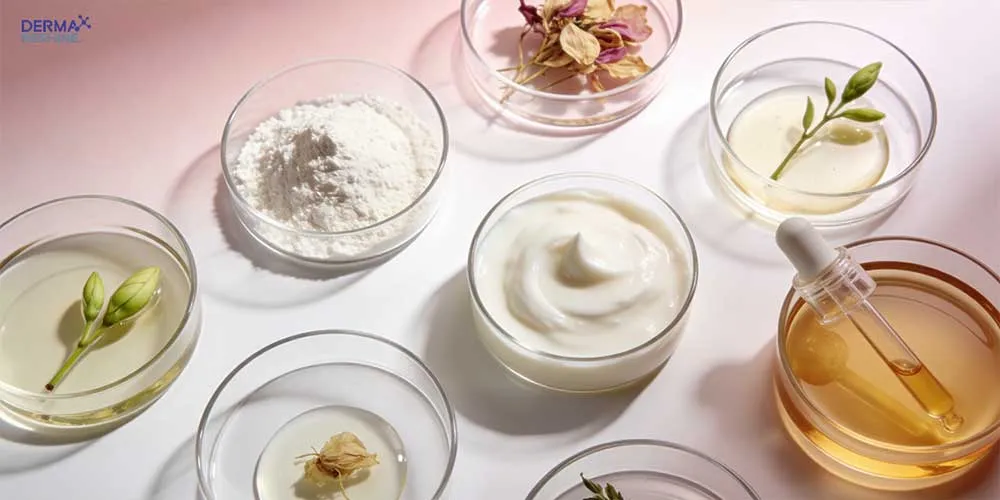
While PDRN and exosomes receive significant attention, skin barrier repair systems remain the most widely applied and commercially stable trend in Korean skincare.
Mature Ingredient Systems Dominating Formulations
Commonly used barrier-supporting ingredients include:
- Ceramides
- Cholesterol and free fatty acids
- Panthenol (Vitamin B5)
- β-Glucan
- Low-irritation niacinamide
What Has Changed Is Not the Ingredients — But the Strategy
Korean formulators are moving away from isolated hero ingredients toward biomimetic lipid ratios and multi-layer hydration systems that reflect the skin’s natural structure.
Barrier repair is no longer positioned as:
- “For damaged skin only”
But as:
- A universal foundation for all skin types, including anti-aging and brightening lines
What These Trends Mean for Brands and Ingredient Buyers
For brands targeting the Korean market, 2026 presents a clear message:
- Ingredient storytelling must be backed by formulation logic
- Raw materials must demonstrate safety, consistency, and synergy
- “Gentle but effective” is no longer optional — it is expected
From a sourcing perspective, Korean partners increasingly value:
- Transparent manufacturing processes
- Regulatory readiness
- Stable long-term supply
The Future of K-Beauty Is Built on Trust
The rise of PDRN, exosomes, and advanced barrier repair systems reflects a deeper transformation in Korean skincare.
Innovation is no longer about novelty alone.
It is about scientific integrity, skin compatibility, and long-term performance.
For ingredient suppliers and formulators alike, success in 2026 will depend on one principle:
Healthy skin is built, not rushed.
올해 모든 한국 스킨케어 브랜드가 장벽 수복 유효성분에 집중하는 이유를 알겠네요. 이 블로그에서 인기 트렌드를 완벽하게 정리해 주었어요.
명확하고 데이터에 기반하며 2026년 K-뷰티 성분 트렌드에 매우 적합한 자료입니다. PDRN, 엑소좀, 그리고 피부 장벽 복구에 대한 집중적인 분석은 브랜드와 공급업체 모두에게 매우 유용합니다. 철저한 연구를 바탕으로 쉽게 적용할 수 있습니다!
No fancy hard science words, super easy to follow. Saved this to plan my next Olive Young haul.