
For US cosmetic brands—whether startups, mid-sized formulators, or established manufacturers—choosing a reliable raw material supplier is make-or-break. A bad partner leads to FDA non-compliance, inconsistent product quality, delayed shipments, and brand reputation damage. In 2026, with stricter FDA enforcement under MoCRA, rising supply chain volatility, and growing demand for clean, traceable ingredients, US buyers need a data-driven, compliance-first approach to supplier selection. This guide walks you through every critical step—from verifying FDA compliance to auditing quality systems, assessing scalability, and avoiding common pitfalls—so you can partner with a supplier that aligns with US market standards and long-term growth goals.
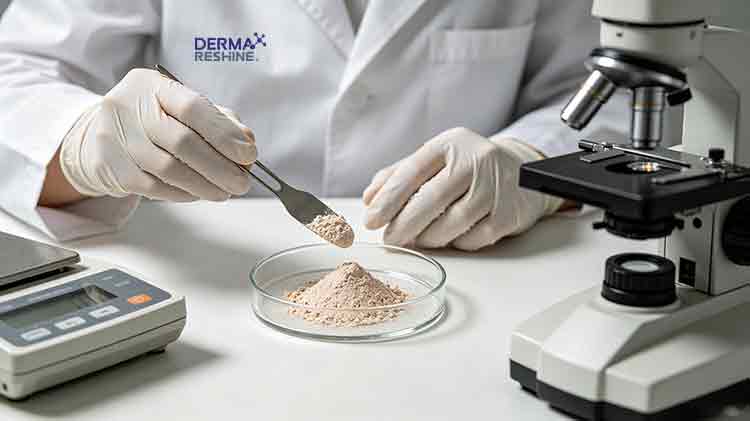
1. Prioritize FDA Compliance & US Regulatory Alignment (Non-Negotiable)
The US cosmetic industry is governed by the FDA (Food and Drug Administration) and the Modernization of Cosmetics Regulation Act (MoCRA) (enforced 2025–2026), which mandates stricter safety documentation, traceability, and GMP (Good Manufacturing Practices) for both domestic and imported raw materials. A reliable supplier must demonstrate full alignment with US regulations—no exceptions.
Key Compliance Checks for US Brands
- FDA GMP Compliance: Confirm the supplier follows FDA’s GMP guidelines for cosmetics, including controlled production processes, trained staff, calibrated equipment, and detailed batch documentation. Ask for a GMP audit report or self-inspection checklist.
- VCRP Registration: Verify if the supplier’s manufacturing facility and ingredients are registered under FDA’s Voluntary Cosmetic Registration Program (VCRP). While voluntary, VCRP participation proves transparency and simplifies FDA inspections.
- Full Ingredient Documentation: Require INCI names, CAS numbers, SDS (Safety Data Sheets), and CoA (Certificates of Analysis) for every raw material. These documents are mandatory for US product labeling and safety claims.
- Restricted Substance Compliance: Ensure ingredients meet FDA’s restricted substance lists (e.g., no banned preservatives, heavy metals, or unapproved colorants). For high-risk ingredients (e.g., alpha arbutin, hyaluronic acid), request third-party safety test reports.
- MoCRA Readiness: Confirm the supplier can provide batch traceability records, stability testing data, and allergen declarations—all required for MoCRA compliance in 2026.
Red Flags to Avoid
- Suppliers who “guarantee FDA approval” (FDA does not “approve” raw materials—only verifies compliance).
- Missing or incomplete SDS/CoA documents.
- Refusal to share GMP audit reports or facility details.

2. Audit Quality Assurance (QA) & Consistency Standards
In the US market, consistent raw material quality directly impacts finished product performance, shelf life, and customer trust. Cheap, low-quality ingredients may save money upfront but lead to formulation failures, skin irritation complaints, and costly recalls. A reliable supplier maintains rigorous QA systems for every batch.
Critical Quality Verification Steps
- Batch-Specific CoA: Demand a unique CoA for every batch that lists purity (e.g., 99%+ for alpha arbutin), moisture content, heavy metal limits (lead, arsenic, mercury), and microbial test results. Cross-check CoA data against your formulation requirements.
- Third-Party Testing: Prioritize suppliers who conduct independent third-party testing (e.g., ISO 17025 accredited labs) for purity, safety, and stability. Avoid suppliers who only provide in-house test results.
- Stability & Shelf-Life Data: Ask for accelerated stability test reports (40°C/75% RH) and real-time shelf-life data to confirm the raw material remains effective and safe during storage and shipping to the US.
- Sensory Consistency: For active ingredients (e.g., niacinamide, GSH), verify consistent color, odor, and solubility across batches. Inconsistent sensory properties ruin finished product texture and performance.
- Quality Control (QC) Facilities: If possible, audit the supplier’s QC lab to confirm they use calibrated equipment, follow standardized testing protocols, and retain batch samples for at least 12 monthsU.S. Food ….
Example Quality Benchmarks for US-Grade Actives
表格
| Ingredient | Minimum Purity | Heavy Metal Limit (ppm) | Microbial Standard |
|---|---|---|---|
| Alpha Arbutin | 99.0% | Pb < 1, As < 2 | Total Plate Count < 100 CFU/g |
| Hyaluronic Acid (Bulk) | 95.0% | Pb < 1, Hg < 0.1 | Yeast/Mold < 10 CFU/g |
| Niacinamide | 99.5% | Cd < 0.5, Sb < 1 | E. coli Negative |
3. Evaluate Supplier Transparency & Traceability
US consumers and regulators demand full supply chain transparency in 2026. A reliable supplier provides complete visibility into raw material sourcing, manufacturing processes, and batch history—critical for addressing safety concerns and building brand trust.
What to Verify for Transparency
- Raw Material Origin: Confirm the source of key ingredients (e.g., plant-based actives from organic farms, synthetic actives from cGMP chemical plants). Avoid suppliers who hide sourcing details.
- End-to-End Traceability: Ensure the supplier uses a batch tracking system that links raw material lots, production dates, test results, and shipping records. This allows you to trace any quality issue back to the source—required for MoCRA compliance.
- Factory Visibility: Ask for photos, videos, or virtual tours of the manufacturing facility. A reputable supplier operates a clean, organized plant with clear production zones and quality control stations.
- Ethical & Sustainable Practices: For US brands focused on clean beauty, verify the supplier follows fair labor practices, eco-friendly manufacturing (e.g., waste reduction, renewable energy), and sustainable sourcing (e.g., organic, non-GMO ingredients).
Red Flags
- Vague answers about raw material origin or manufacturing processes.
- No batch tracking system or inability to provide traceability records.
- Unsanitary or outdated facility images.
4. Assess Scalability, MOQ Flexibility & US Logistics Capability
US brands range from small startups (5–50kg monthly orders) to large manufacturers (ton-scale orders). A reliable supplier must scale with your business while offering flexible terms for small buyers and consistent capacity for large orders. Additionally, US logistics expertise is critical to avoid shipping delays, customs issues, or product damage.
Key Logistics & Scalability Checks
- MOQ Flexibility: For startups, look for suppliers with low minimum order quantities (MOQs) (e.g., 5–25kg for actives) and sample options (100g–1kg) to test quality before bulk orders. For scaling brands, confirm the supplier can handle ton-scale orders without compromising lead times.
- Production Capacity: Verify monthly production capacity for your key ingredients (e.g., 10 tons/month for hyaluronic acid). Ask about backup production lines to avoid shortages during peak demand.
- US Shipping Expertise: Ensure the supplier has experience shipping to the US, including:
- Compliance with FDA import regulations (e.g., proper labeling, documentation for customs).
- Multiple shipping options (air freight: 7–14 days; sea freight: 30–45 days) with tracked delivery.
- Proper packaging (e.g., moisture-proof, temperature-controlled for sensitive actives) to prevent damage during transit.
- Lead Time Consistency: Confirm standard lead times (sample: 3–7 days; bulk: 14–21 days) and ask for on-time delivery rates (target: 95%+). Delays disrupt your production schedule and harm customer satisfaction.
- Inventory Stability: For high-demand ingredients (e.g., alpha arbutin, NAD), verify the supplier maintains safety stock to avoid stockouts.
Typical US-Friendly Terms for Reliable Suppliers
- Sample MOQ: 100g–1kg (free or low-cost for qualified buyers)
- Bulk MOQ: 5–25kg (actives); 50–100kg (excipients)
- Lead time: 14–21 days (bulk); 3–7 days (samples)
- Shipping: DDP (Delivered Duty Paid) to US ports (simplifies customs for buyers)
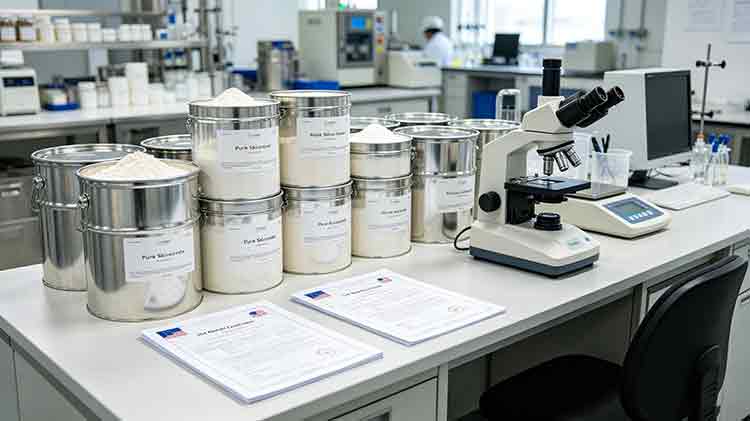
5. Verify Technical Support & US Market Expertise
A great supplier is more than a vendor—they’re a technical partner who understands US formulation needs and regulatory challenges. For US brands, especially startups without in-house R&D teams, technical support can accelerate product development and avoid costly mistakes.
What to Look for in Technical Support
- US Formulation Knowledge: The supplier’s technical team should understand US skincare trends (e.g., clean beauty, anti-aging, brightening) and recommend ingredients that align with popular formulations (serums, creams, masks).
- Formulation Guidance: Ask for application guidelines, recommended usage rates, and compatibility data for your key ingredients (e.g., “Alpha arbutin 2–5% for brightening serums, compatible with niacinamide”).
- Regulatory Support: A reliable supplier helps you navigate US regulations by providing labeling templates, safety claim support, and updates on FDA rule changes (e.g., MoCRA enforcement).
- Responsive Communication: Prioritize suppliers with English-speaking technical and sales teams available via email, phone, or video call. Fast response times (24–48 hours) are critical for troubleshooting formulation or shipping issues.
Red Flags
- Technical team lacks knowledge of US cosmetic regulations or formulation trends.
- Slow or unresponsive communication.
- No application guidelines or compatibility data for key ingredients.
6. Check Supplier Reputation & US Client References
In the US cosmetic industry, reputation is everything. A reliable supplier has a proven track record of working with US brands, positive customer reviews, and no history of FDA violations or quality scandals.
How to Verify Reputation
- US Client References: Ask for 3–5 references from US-based cosmetic brands (startups and established companies). Contact these references to ask about quality consistency, delivery reliability, technical support, and overall satisfaction.
- Industry Reviews: Check B2B platforms (e.g., Made-in-China, Alibaba), industry forums, and social media for reviews from other US buyers. Look for consistent feedback about quality, compliance, and service.
- Avoid Red Flags: Steer clear of suppliers with:
- Multiple complaints about quality inconsistencies or non-compliance.
- No US client references.
- A history of FDA import alerts or customs seizures.
7. Final Due Diligence: Sample Testing & Pilot Orders
Before committing to a long-term partnership, always test samples and run a pilot order—this is the final step to confirm the supplier meets all your requirements.
Sample Testing Protocol
- Request 2–3 samples of your key ingredients from shortlisted suppliers.
- Conduct in-house testing for purity, solubility, color, odor, and compatibility with your formulation.
- Send samples to a third-party US lab for safety and purity verification (critical for high-risk ingredients).
- Compare results against CoA data and your quality standards.
Pilot Order
- Place a small bulk order (e.g., 25–50kg) to test production quality, lead time, packaging, and shipping.
- Evaluate the supplier’s communication, order accuracy, and post-delivery support.
- Only proceed with a long-term contract if the pilot order meets all expectations.
Choosing a reliable cosmetic raw material supplier for US brands in 2026 requires a holistic, compliance-first approach—prioritizing FDA alignment, quality consistency, transparency, scalability, technical support, and proven reputation. By following this guide, you can avoid common pitfalls, reduce regulatory and quality risks, and partner with a supplier that supports your US market growth.
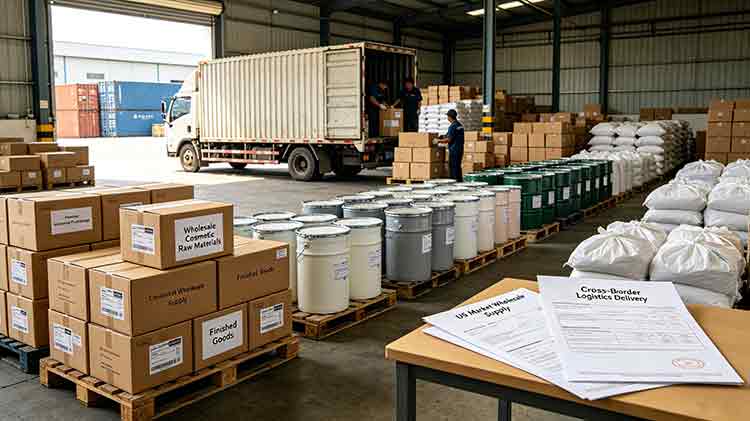
For US brands seeking a trusted partner, Derma Reshine combines FDA-compliant manufacturing, 99%+ pure active ingredients, flexible MOQs (5kg+), US-focused logistics, and English-speaking technical support—tailored to the unique needs of US cosmetic formulators.
Ready to source high-quality, FDA-compliant cosmetic raw materials for your US brand? Contact Derma Reshine today for a free sample and custom wholesale quote.