
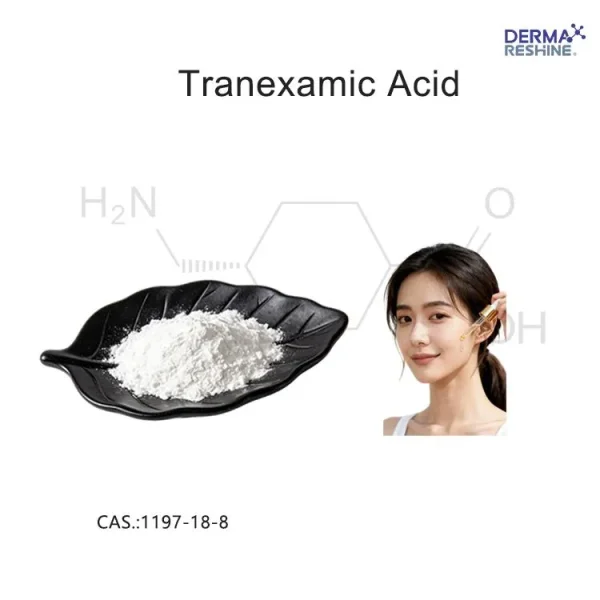
Tranexamic Acid
What is Tranexamic Acid?
Tranexamic acid is a synthetic amino acid derivative primarily used for hemostasis and skin whitening.
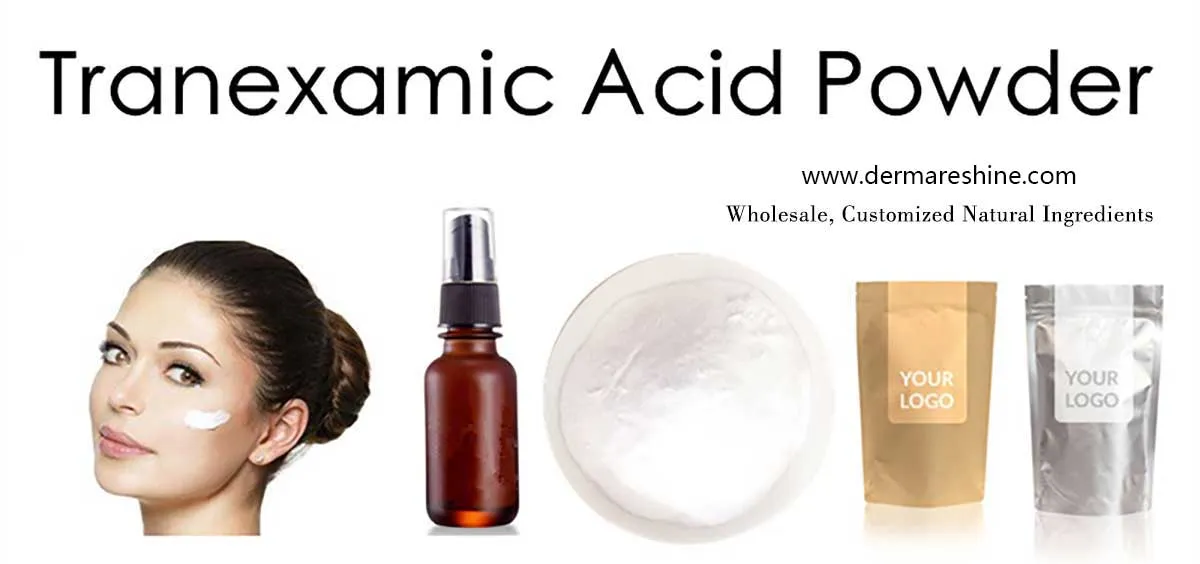
Whitening Mechanism
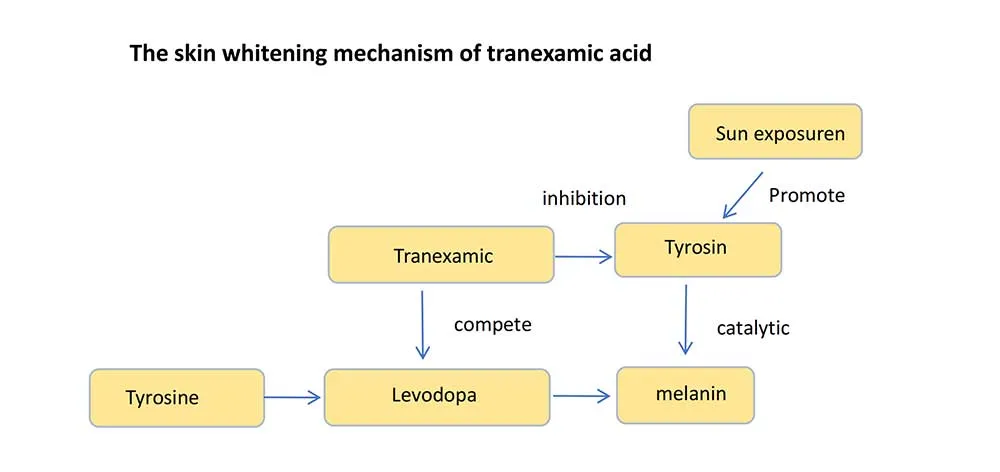
The whitening mechanism of tranexamic acid is based on its partial chemical similarity to tyrosine, which is an important “raw material” for melanin production.
-
Tranexamic acid binds to tyrosinase like tyrosine
-
Reduces tyrosinase activity
-
Inhibits melanin synthesis, providing whitening and blemish removal effects
Amazing Discovery: How to Remove Melanin from Your Body from Within!
Inhibit the Melanin “Switch”
-
Inhibits the activity of plasminogen activator (PA)
-
Reduces tyrosinase activity in melanin cells
-
Effectively blocks the source of melanin production
Anti-inflammatory and Soothing Effects
-
Helps with post-inflammatory pigmentation such as acne scars or dullness after skin damage
-
Provides anti-inflammatory effects to improve skin tone
Improves Vascular Function
-
Regulates blood vessels to improve pigmentation issues related to vascular dilation (e.g., brown and blue spots)
-
Promotes a more even skin tone
Advantages Compared to Traditional Skin Whitening Methods
-
Excellent effectiveness: Particularly effective for melasma (“butterfly spots”) and post-inflammatory hyperpigmentation. Many dermatologists use it as part of an oral treatment regimen.
-
Dual action: Oral intake regulates internal functions, while tranexamic acid serums and masks act directly on the skin.
-
Relatively gentle: When used under a doctor’s supervision, side effects are minimized compared to conventional whitening agents (contraindications must be checked).
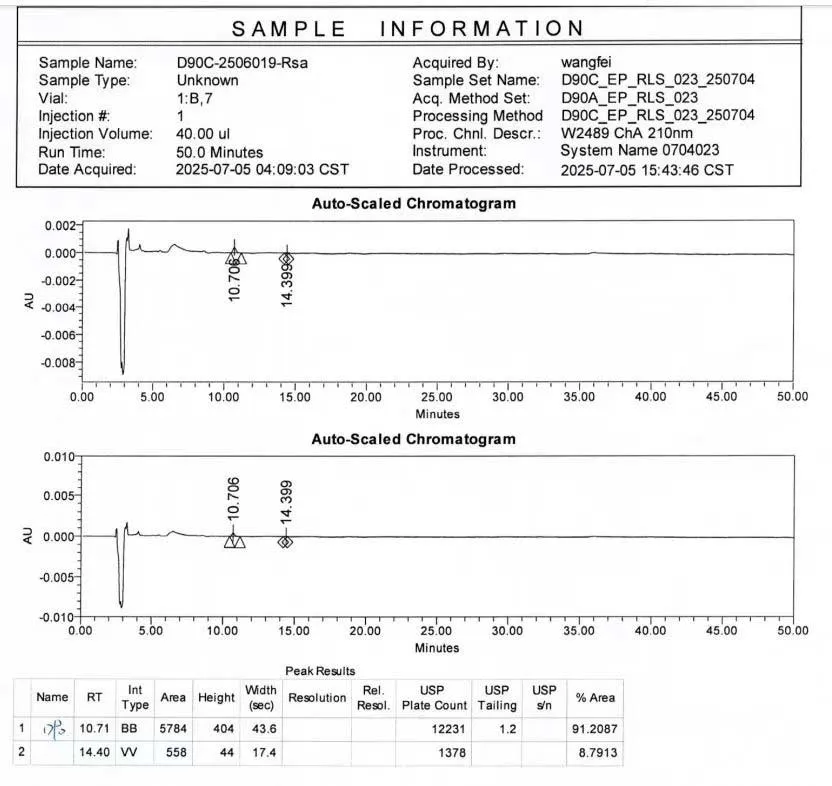
Key Data on Skin Whitening and Melasma Improvement
-
Supported by clinical and in vitro studies
Regulatory Requirements
-
China:
-
Maximum allowable concentration in facial serums: 5%
-
General skincare products: 0.5%–3%
-
-
EU:
-
Allowed in both leave-on and rinse-off products
-
Leave-on products: maximum 3%
-
Rinse-off products: no specific upper limit, safety assessment required
-
-
Irritation-related data:
-
Topical use at 3–5% shows side effects in <5% of cases (mild dryness or redness)
-
Patch test recommended for sensitive skin
-
Karjani –
The work and product are at your level! Thank you for the efficiency and quality!
Pongz zPong –
Very fast shipping. Responds quickly. Great communicatioin. Easy and rewarding to do business with.
Ngoc-Thuy Pham –
Excellent product and customer service. Delivery was very fast. Thank you,