
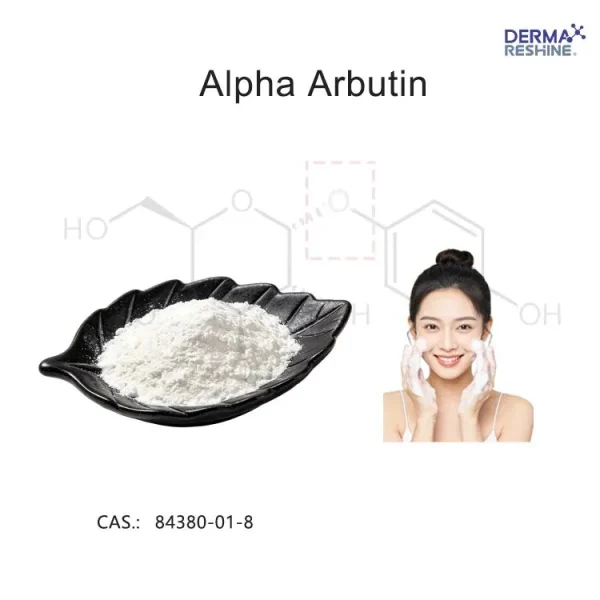
Is α-Arbutin Safe in Cosmetic Products?
The SCCS considers the use of α-Arbutin to be safe for consumers in cosmetic products at concentrations up to 2% in face creams and up to 0.5% in body lotions.
This safety conclusion is based on the final opinion issued by the SCCS of the European Commission Directorate‑General for Health and Food Safety, as published in the public document Safety of alpha-arbutin and beta-arbutin in cosmetic products (SCCS/1642/22).
Please click here to view the original source.
Derma Reshine Alpha-arbutin is your trusted choice for brightening ingredients.
Day Natural, the trusted partner in global whitening raw materials, proudly presents Derma Reshine—our premium skincare brand. With a robust supply chain, cutting-edge production technology, and vast international market experience, we provide one-stop services from product consultation and sample testing to bulk supply. Whether you want to integrate Alpha Arbutin Powder into your existing product line or create new formulations, we fully support your success in the global whitening market.
1. Water Solubility Test of Derma Reshine α-Arbutin
2. Summary of stability study data for Derma Reshine α-arbutin
Our Alpha Arbutin Powder is carefully selected from nature’s finest raw materials. Produced through precise enzymatic fermentation and purification, it retains its potent whitening properties. The unique molecular structure allows for deep skin penetration without irritation, effectively inhibiting tyrosinase activity and reducing melanin production—achieving skin whitening from the inside out. Derma Reshine harnesses this power to deliver exceptional skincare results.
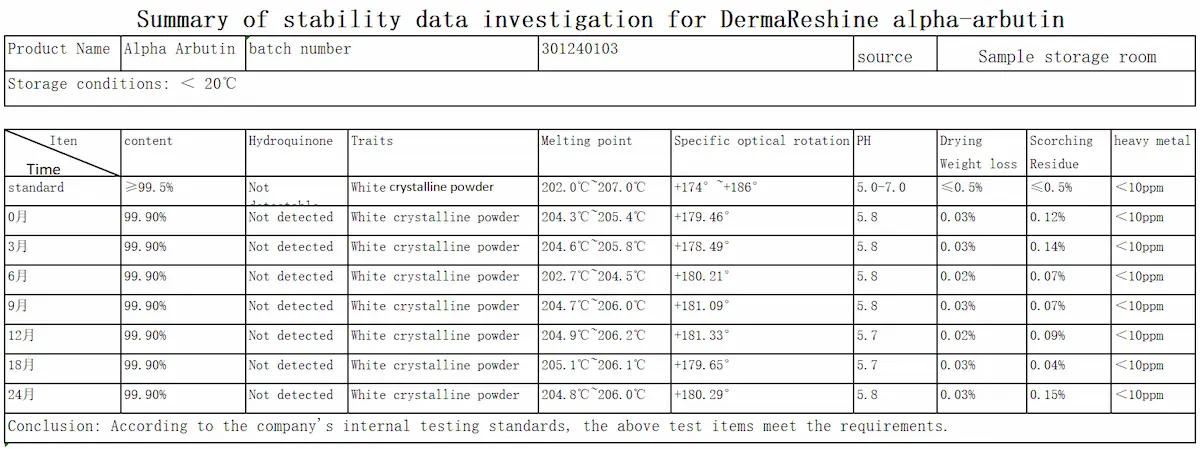
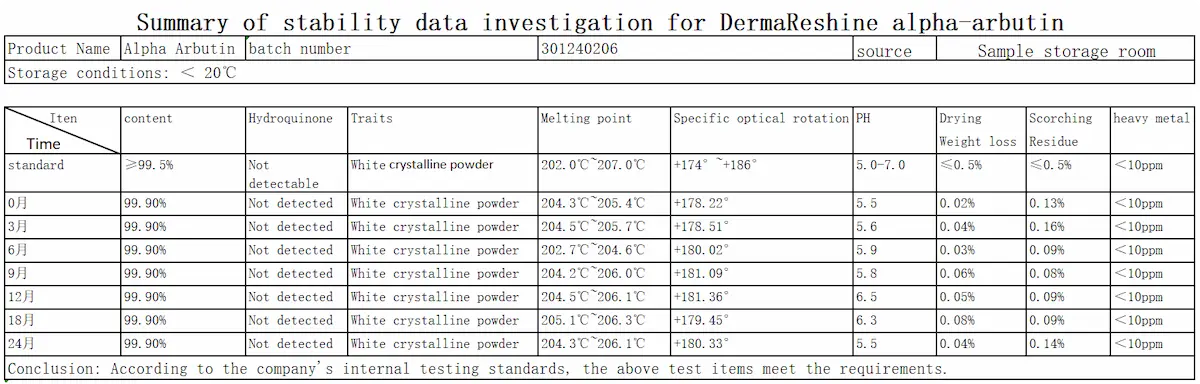
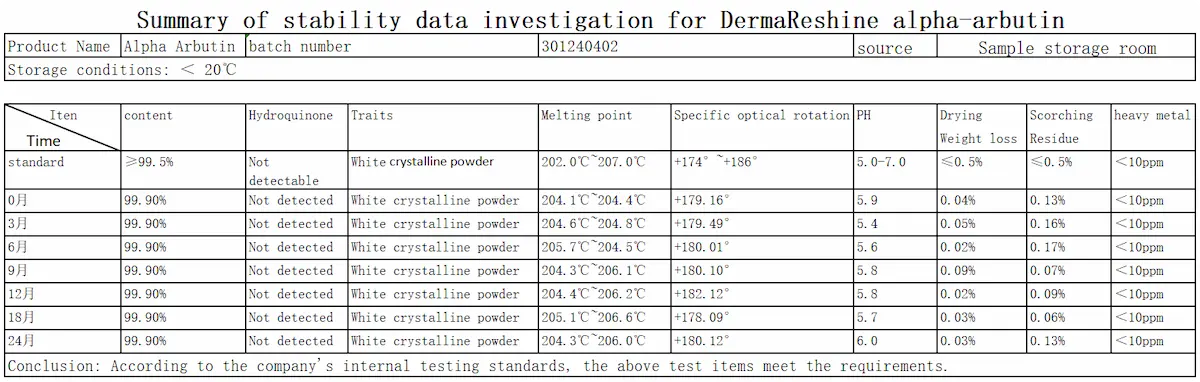

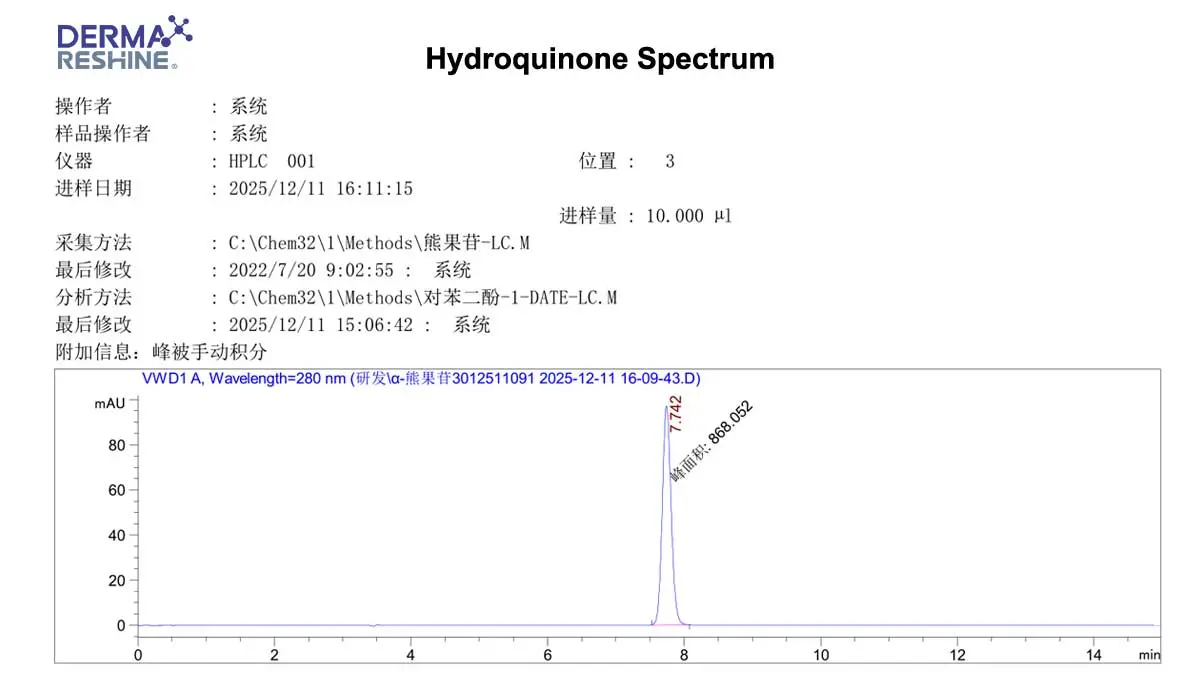
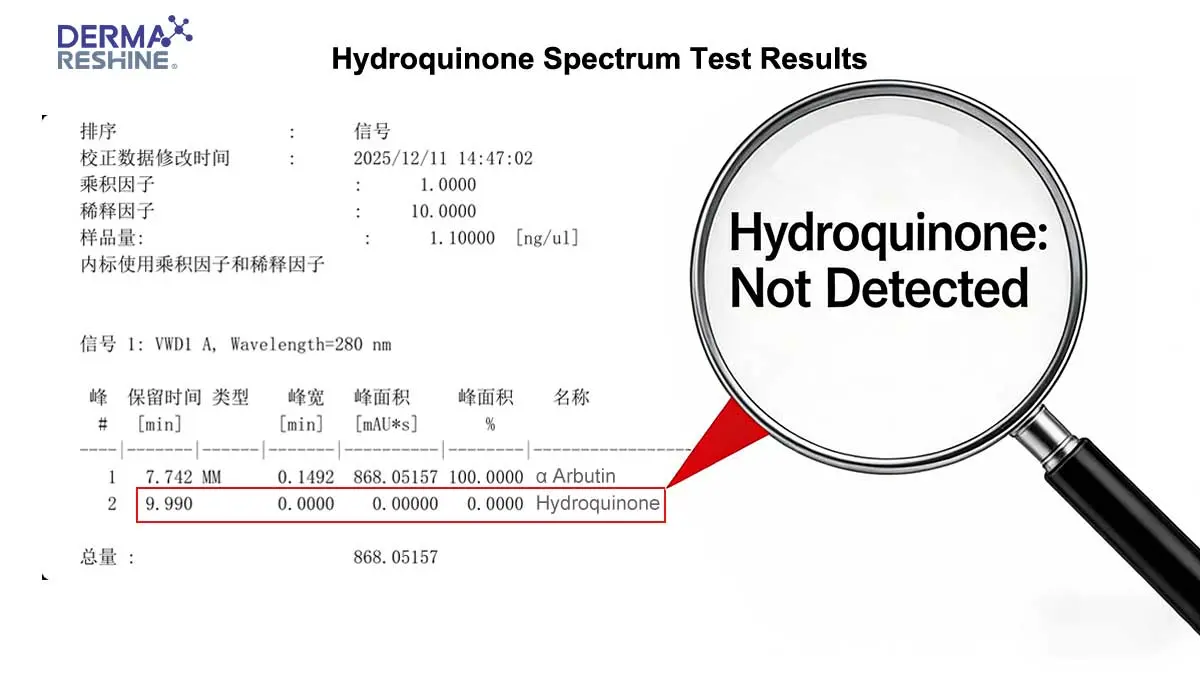
3. Derma Reshine: Technological Innovation, Superior Quality
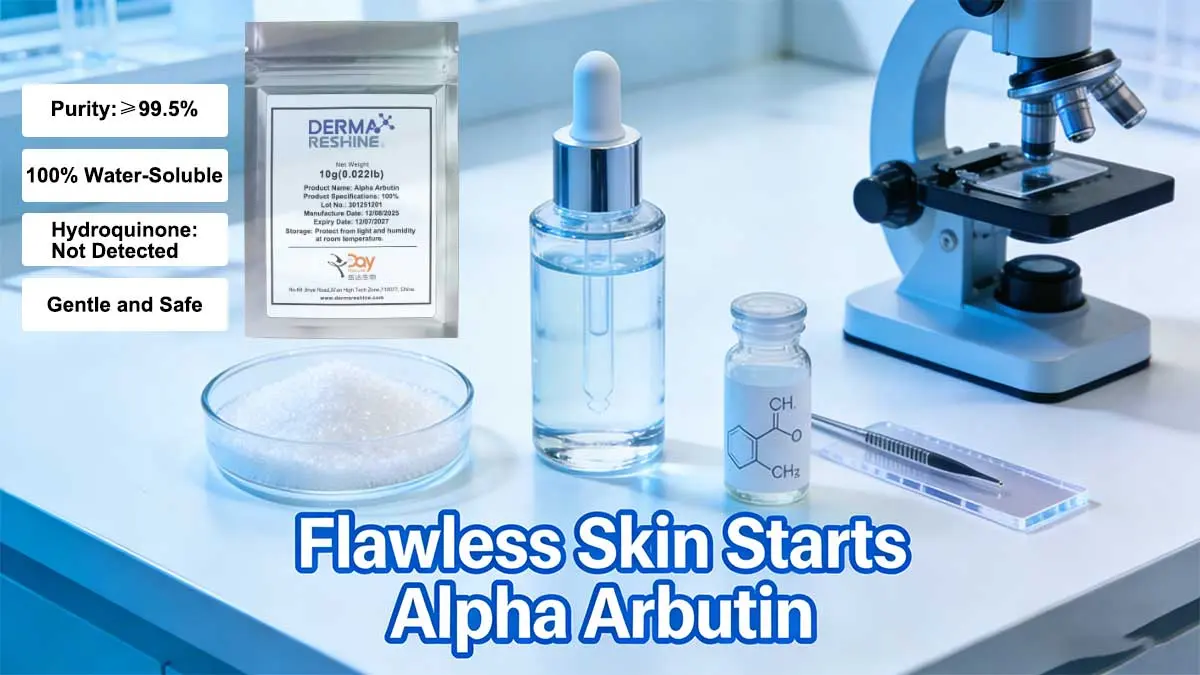
In the international market, quality is our priority. At Day Natural, we invest heavily in R&D and employ internationally advanced production equipment and testing technology to ensure that each batch of Alpha Arbutin Powder meets the highest quality standards. This dedication goes beyond product excellence; it reflects our commitment to every partner and consumer, including those who trust Derma Reshine for premium skincare.
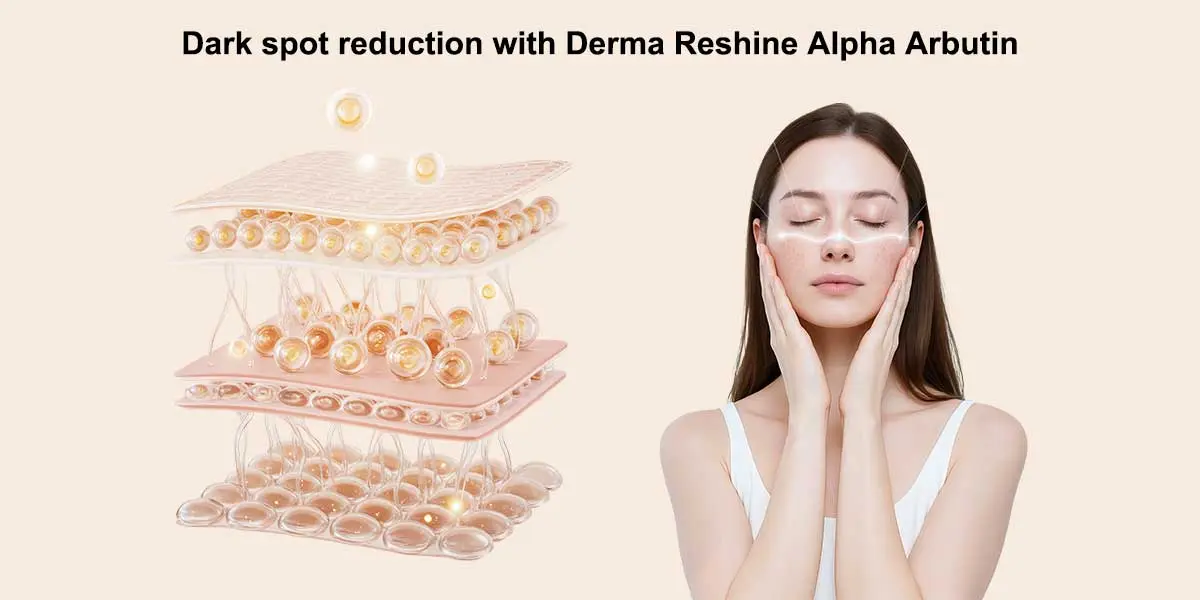
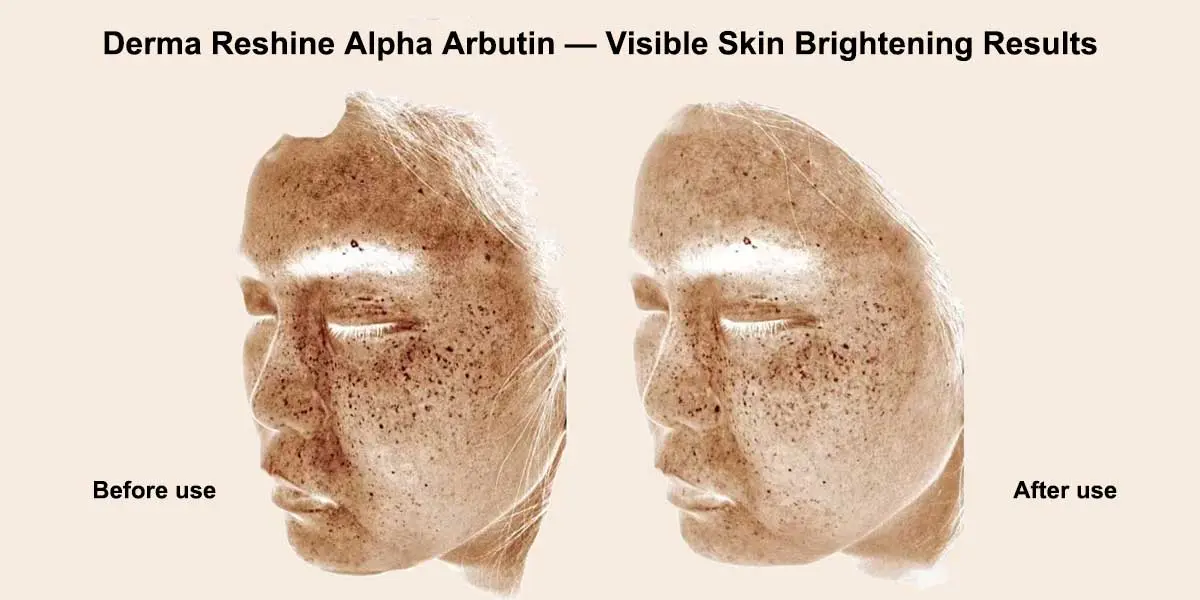
What Can I Mix Alpha Arbutin Powder With?
Alpha Arbutin Powder can be combined with other brightening and skin-lightening ingredients to create powerful formulas. Here are some compatible ingredients:
-
SepiWhite: A potent blend of citrus extracts that works with Alpha Arbutin to enhance skin lightening.
-
GigaWhite: A botanical blend designed to address various causes of skin discoloration.
-
Vitamin C: A brightening antioxidant that pairs well with Alpha Arbutin to reduce dark spots.
-
L-Glutathione: Known for its antioxidant and whitening properties, it enhances the brightening effects of Alpha Arbutin.
-
Kojic Acid: A tyrosinase inhibitor that works with Alpha Arbutin to lighten skin.
When mixing α Arbutin Powder with other ingredients, it’s important to maintain compatibility in terms of pH and solubility. For optimal results, we recommend limiting the number of active whitening ingredients in a formula to avoid skin irritation or over-drying.
What is the difference between alpha arbutin and beta arbutin?
| Product Name | Alpha Arbutin | Beta Arbutin |
|---|---|---|
| Traits | White crystalline powder | White crystalline powder |
| CAS No. | 84380-01-8 | 497-76-7 |
| INCI Name | Alpha-Arbutin | Arbutin |
| Addition amount | 0.5%–2% | 2%–7% |
| Water-soluble | 100% | 100% |
| Security recommendations | It is not recommended to use this product with highly concentrated acidic ingredients, as this may accelerate hydrolysis and cause irritation. |
|
| Formulation suggestions | It can be used in combination with other whitening ingredients. | Can be combined with soothing ingredients. |
| Market Applications | High-end whitening products | Mid-range whitening products |
| Regulatory compliance | China’s “Technical Specifications for Cosmetic Safety”: No restrictions on the amount of added ingredients.EU Regulation EC 1223/2009: Permitted for use, at a concentration of ≤2%.
US FDA: Listed in the TSCA inventory, no restrictions. South Korean KFDA: Approved for use in whitening cosmetics, at a concentration of ≤2%. |
China: Permitted for use, but hydrolysis risks need to be controlled.European Union: Permitted for use, but must be labeled “May release hydroquinone.”
United States: No specific restrictions, but attention should be paid to hydroquinone residue. South Korea: High-concentration formulas must pass irritation tests. |
Helena Nollez –
Just received my order and I’m really happy with it. Delivery was fast delivery and the package arrived on time without any issues. The design and packaging looked really nice—super neat and well done. The whole process was smooth and you provided good service from start to finish. Definitely satisfied and would order again!